
Modern relationships feel confusing because we’re living in a transitional era of love.
Love has never existed outside of culture. The way we understand relationships has always been shaped by the era’s social and moral frameworks. What we expect from love today would have been unfamiliar—and in some cases unimaginable—to earlier generations.
For much of history, marriage was less about personal fulfillment and more about duty, survival, and social stability. Economic alliances, family continuity, and religious obligations often determined partnerships. Love, if it developed, was secondary to responsibility. The emphasis was on structure and endurance rather than emotional compatibility.
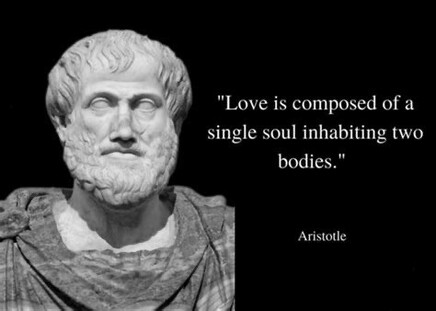
Even in ancient philosophy, love was examined not as personal fulfillment but as moral and spiritual formation. In the Symposium, Plato described Eros as a longing that draws the soul toward beauty and truth. Aristotle later framed love as a cultivated virtue grounded in shared goodness and ethical living. Love was not merely emotional—it was formative.
As Christianity spread across Europe, love took on a spiritual dimension. Saint Paul elevated Agape—unconditional, self-giving love—above desire, shaping Western moral imagination for centuries. Marriage, however, remained largely institutional. Roles were defined. Expectations were clear. Gender norms were fixed.
The Enlightenment began reshaping this landscape by placing greater emphasis on individual choice and emotional authenticity. Thinkers such as Jean-Jacques Rousseau helped normalize the idea that romantic affection could be the basis for marriage. Love was no longer solely about stability—it was also about emotional connection.
The 20th century accelerated this redefinition.
Post–World War II economic growth reinforced marriage as a stabilizing institution. By the 1960s, however, the sexual revolution and the feminist movement challenged longstanding norms. Women entering the workforce altered domestic dynamics. Expectations shifted from duty toward fulfillment. Marriage increasingly became about personal happiness rather than social obligation.
The digital revolution of the 21st century transformed intimacy again. Online platforms and social media expanded access to connection while complicating authenticity and commitment. Geographic boundaries dissolved. Options multiplied. The pace of relationship formation accelerated.
Scholars of intimacy have closely observed these developments. Anthony Giddens, in The Transformation of Intimacy, argued that traditional romantic love—marked by permanence and complementary gender roles—has given way to what he called “confluent love.” In this model, relationships exist for mutual satisfaction and continue only as long as both partners experience fulfillment. Commitment becomes conditional.
This broader deinstitutionalization of marriage has reshaped expectations. Cohabitation has increased. Marriage is delayed or declined. Gender roles are less rigid. Same-sex partnerships have gained legal recognition across many societies.
With that evolution came new pressure.
Love was no longer simply about partnership or survival. It was expected to provide emotional intimacy, sexual compatibility, personal growth, and a shared purpose. The relationship was no longer just a structure within society—it became a source of identity.
As expectations expanded, so did the conditions under which relationships were sustained. When satisfaction becomes the primary anchor, stability becomes more fragile. When that satisfaction declines, leaving becomes more socially acceptable.
This transformation has brought both freedom and instability.
On the one hand, individuals have greater agency to choose partners aligned with their values and to leave relationships that are harmful or unfulfilling. On the other hand, when love becomes deeply intertwined with identity and self-development, relationships carry enormous psychological weight. If they falter, it can feel as though the self is faltering with them.
Modern love asks more of us than traditional models ever did. It expects emotional literacy, mutual growth, vulnerability, and ongoing negotiation. Without fixed roles to rely on, couples must define their own structure—and keep redefining it as life evolves. This requires self-awareness, communication skills, and a willingness to adapt.
Yet older paradigms have not disappeared.
Many people still carry internalized expectations about sacrifice, permanence, and gender roles. These inherited beliefs coexist with contemporary ideals of equality and self-actualization. Sometimes they harmonize. Often they collide—within the same relationship, and sometimes within the same person.
The evolution of love is not a simple progression from “traditional” to “modern.” It is a layering of expectations. We now seek companionship, passion, equality, emotional safety, and personal growth—often simultaneously. When relationships struggle under this weight, it is not necessarily because love has weakened, but because its role has expanded beyond what earlier structures were designed to hold.
Understanding this shift helps explain why relationships today feel both more intentional and more fragile. As cultural scaffolding loosens, personal responsibility intensifies. What was once externally reinforced must now be internally sustained.
This is where conscious love becomes necessary.
It is not a rejection of tradition, nor a romantic ideal detached from reality. It is an adaptation to complexity. When relationships are no longer sustained by obligation alone, they must be sustained by awareness—awareness of our expectations, our inherited beliefs, and our psychological patterns.
Love has evolved from duty to desire to self-expression. The next evolution requires something more deliberate.
This is why conscious love is no longer optional—it is adaptive.
Find out more on 9 Key Comparisons Between Conscious Love & Conventional Relationship Dynamics.